Monday, May 17, 2010

Grandparent's Rock...Will You?

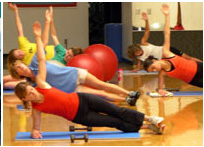
As I’m writing this blog post, my toddler triplets are at the beach with their grandparents (yes, those are my kids in the pic and that is their grammy leading the pack). There are several things that are amazing and fabulous about this situation. First, I am free from cleaning up food, kissing boo-boos and breaking up fights for the next several days. Second, my parents actually graciously and willingly took three 2-year olds to the beach. Third, my children’s grandparents are easily able to keep up with my toddler triplets for days on end.

Truthfully, I’ve never given much thought to what kind-of grandparent I want to be. I’m only thirty-something after all. But since having kids, I have become more aware of just how lucky my children are to have two sets of highly functioning grandparents. They are awesome. Both my husband and I’s parents are very active, healthy and constantly on the go. One plays tennis, one attends my bootcamps twice a week and the other two are out golfing almost every weekend. This means they can enjoy their “middle age” (which by the way is now between 50-70, at least in my book) through travel, sports and of course, their grandkids! And it doesn’t end there! My kids have great uncles and aunts who also hike Alaska in the dead of winter and get up at 6 AM every morning to work out.

Thinking back to my own grandparents brings back memories of my siblings and I sitting in the tv room playing cards with my grandma or watching her sew her newest doily. My grandparent’s would never have been able to push all of us in a triple stroller or chase us down the beach. And you know what, I never was close to any of my grandparents. I could never relate to them. Yet, my children’s grandparents have no problems keeping up with them. It is fabulous being able to confidently leave my children with their grandparents and know they are in the best of hands.

I have friends who aren’t so lucky. Many of them have parents with health problems due to inactivity or lifelong unhealthy eating patterns. They worry about leaving their young children with their parent’s because they don’t think “the grandparent’s could keep up with the grandchildren”. There is no way they could even take their grandkids to the park for thirty minutes let alone the beach for a week. It breaks my heart.

Here’s a wake-up call. If you think you may have problems keeping up with young children in your 30’s or 40’s, imagine how hard it is going to be 20-30 years later! Honestly, you won’t be able to do it. You will be the grandparent that is sitting in front of the TV limping as you get up to grab a bag of chips as your grandkids cringe. Forget running down the beach with them; you probably won’t even be able to make it down the stairs.

If you think you don’t care if you can’t chase down your toddler grandchildren, you probably don’t have kids. I won’t experience the utter bliss of being a grandparent for at least 20 years (PLEASE!) but I can imagine how fabulous it must be. My children’s grandparents light up around my children. They are so proud of their mere existence. My kids worship their grandparents. At 2 years old, their grandparents are their idols. I hear from so many people how wonderful being a grandparent is, “it’s the icing on the cake”, “it’s all the gains, none of the pain”, “it’s like earning a paycheck for merely existing”. You get the point.

Now more than ever, we know how inactivity and unhealthy eating impacts our future quality of life. Carrying extra weight dramatically ages our bodies and minds. Inactivity gives raise to cardiovascular disease and diabetes. Our bodies are designed to be highly active and without exercise, they break down. This only accelerates as we age. Please be the kind of grandparent your grandchildren adore. Don’t rob yourself of the icing on the cake by eating too much cake! Take a good look at what your future holds and take control. It may never be too late for you but we all know how quickly children grow-up. If you don’t take action now, it will be too late for your children and your grandchildren to enjoy their grandparent's!

Thursday, April 8, 2010

Nice Biceps but Can You Run the Subway Steps?

Great news! Being fit is no longer defined by how you look. Bulging biceps are out while a healthy balanced body is in! The old is new again, personal training is finally getting back to it's roots; it's called functional training!

Trainers hovering over clients counting reps on giant machines are a thing of the past. In fact, we are seeing fewer and fewer groups of young men sporting overly developed chests in the free-weight room, thank goodness. This is because personal training is returning to the basics of fitness with functional training. Personal trainer studios are looking more and more like old-school gymnasiums or sport fields and less and less like typical "gyms" with lines of machines. More and more high caliber trainers are moving their clients away from heavy weights and training them using simple and functional equipment. The result is clients that are more agile, have fewer injuries, are more muscularly balanced and are better able to function in the world.

Being fit is no longer about bulging biceps but about being able to run the subway steps, jump over a creek, bend over and pick up a dropped quarter, toss around your toddler and keep up with your grandchildren efficiently and pain-free. Humans are hunter/gatherers. Our bodies are designed to move quickly, reach and bend, and travel for miles without fatiguing. The sad fact is our society's way of life has changed while our bodies physiology and anatomy remain the same. The result is muscle imbalances, chronic pain and weight gain. Basically, our bodies are breaking down because they are no longer doing what they were designed to do.

Luckily, personal trainers are coming to the rescue by implementing programs that take people back to their hunter/gatherer days and challenge our bodies in ways they were designed. The reward is a more balanced, healthy, and functional body and mind. So get off those clunky machines and train functionally. Incorporate the following exercises into your next workout. Start by doing each of these exercises for 30 sec. and working up to 1 minute. Run laps, jump rope, or run a flight of stairs between each set. Repeat 2-3 x.

Military Push-ups - Squat thrust down to a push-up position. Perform 1 push-up. Bring your left knee to nose, right knee to nose, perform another push-up and return to a standing position. Repeat.

Tire Jumps with Lay-up - Jump forward from your right foot to your left and back to right as if you were jumping through three staggered tires in front of you. Immediately jump off both feet into a lay-up. Jog backwards for 5 counts returning to start. Repeat sequence starting with the opposite leg.

Squat Jumps - Squat down and touch your shins or the floor. Immediately propel yourself up and jump with both feet as you reach up with your arms. Land quietly on your toes and repeat. Quicken your pace while maintaining your form.

Squat Jacks - Keep your hands behind your head and slowly squat down into a deep plie (otherwise known as a sumo squat). Jump your feet together as you would in a jumping jack and immediately jump back out to a deep plie. Continue to perform squat jacks. The key to this exercise is to take your time and get as low as possible in every sumo squat.

Mountain climbers - Begin in a push-up position on hands and toes. Bring the right knee into the chest resting foot on the floor. Jump up and switch feet in the air, bringing the left foot in and the right foot back. Continue alternating feet. For an extra oblique challenge, rotate hips and bring your right knee to your left elbow, jump your right foot back as you bring your left knee to right elbow. Continue to alternate knee to elbow.

Aim on incorporating functional training into 2-3 workouts/week. The next time you run after your child as they dart for the road, scramble up a treacherous hill while hiking, or carry all ten bags of groceries from the car to your kitchen with ease, you will know the hard work you've put into functional training has paid off!

Tuesday, March 30, 2010

A No Nonsense Way to Measure Your Exercise Intensity

Personal trainers love to monitor client's heart rates. We do heart rate formulas in our sleep and can often correctly guess a client's heart rate at any given time during a workout. As trainers, we use heart rate to determine how hard our client is actually working, how many calories they are burning and if they are working within an appropriate training zone. Heart rate monitoring is great for us "trainers" but what about the average Joe who's just trying to get the most out of their workout? Luckily, there is a straightforward, no math required solution! The simple talk test is a way to turn a scientific physiological principle into an easily measurable variable that anyone can implement. Let's take a closer look at how you can easily measure your exercise intensity, no chest straps necessary!

When we train our cardiorespiratory system, we are primarily using fat oxidation and aerobic glycolysis to fuel our workout. When we are working at a low to moderate intensity we are working under our first ventilatory threshold: VT1. A standard talk test can help us determine our intensity. If you can speak in sentences while working out, you are working at or under VT1 and using fat as your primary fuel source. When performing high intensity cardio intervals, like repeatedly jumping or sprinting we switch to using both fat and glucose as fuel. During these 30 sec. to 1 min. bursts of activity we are are working at a moderate to high intensity and are working between VT1 and VT2. As our bodies rely more on glucose as fuel, more carbon dioxide is produced. The only way to get rid of this carbon dioxide is through increasing our respiration. While working at or under VT2, you may be able to utter a few choice words, but you cannot comfortably carry on a conversation.

If working out for equal times under VT1 and between VT1 and VT2, overall calorie burn is higher while working around VT2. However, even though caloric burn is higher during high intensity intervals, we cannot sustain this type of activity for long periods of time. Therefore, the most efficient way to burn through lots of calories is to alternate low intensity cardio exercise with high intensity bursts of activity, otherwise known as interval training.

In order to get the most out of your interval workouts, use the talk test to ensure you are working at the appropriate intensity. Try walking or slow jogging for 2 min at an intensity that allows you to carry on a conversation. Then, pick up the pace for 30 sec-1 min at an intensity that a conversation would no longer be comfortable. Continue to alternate between low and moderate/high intensity activity for 30-60 min. to maximize your caloric burn and improve your performance.

Friday, February 26, 2010

So what does an MMA fighter eat?

Over the past few months, I've heard about MMA (mixed martial arts) fighting on the radio or on the internet several times. I'm not sure if this already popular full contact combat sport is having another surge in popularity or if I'm more attuned to it since a friend of mine began training. If MMA doesn't ring a bell, you may be more familiar with the UFC (Ultimate Fighting Championship), an MMA promotional company.

Whether you are a follower of the sport or not, you have to respect the amount of dedication and training these athletes undergo. Besides basic athletic training; cardiovascular conditioning, speed training, resistance training and flexibility, these athletes also are trained in a number of traditional martial art such as kickboxing, full contact Karate, Greco-Roman wrestling, Brazillian Jui-Jitsu, etc. Sound intense? It is!

Like any athlete training for hours every day, an MMA fighter needs to be aware of the fuel their providing their body. Without proper nutrition, their performance will suffer. So, what does an MMA fighter eat? I turned to my friend Brandon's blog to find out. Brandon has been formally training as an MMA fighter since December. In addition to spending hours a day pushing himself to his physical and mental limits, he is also a father, husband and Army drill sergeant. For someone who's exercise routine is as thick as the Sunday paper, it turns out his diet is not much different than what I recommend to my clients; in fact, some of his recommendations mirror mine exactly. So here it is from the mouth of an MMA fighter:

O.k., so to give you an idea of what someone like me eats to try to keep a moderately healthy diet, I'll give you a few examples. You might even try these yourself if you're thinking of positively changing the way you eat while still keeping it interesting and tasty.

I have just a few main rules that I feel are essential to any real diet:
1. No fast food! Avoid as long as humanly possible.
2. Avoid salt whenever possible. Replace with other herbs like basil, garlic, pepper, etc.
3. Keep alcohol consumption to a minimum. For me, just a few drinks a month will slow my muscle recovery and impede my endurance, speed, and overall drive.
4. Avoid pork at all costs! Also try to avoid red meats. Eat poultry and fish as much as possible. Poultry is leaner, contains more protein and water, and has less nitrates.

One of the major upsides to the following "recipes" are that they are simple to prepare, thus saving time or energy for someone who is already tired from working out.

For someone like me, who LOVES to eat and is working out regularly, it is important to make sure that I'm taking in proper amounts of protein, carbohydrates (both simple and complex), and getting plenty of natural vitamins from fruit and veggies.

I've found that adding fruits to my diet really makes a difference with my endurance during my workouts.

BREAKFAST: For quick and easy preparation, I have a plastic container already containing a mixture of nuts and raisins or some type of dried fruit, maybe also some kind of seeds.

I don't even like nuts, but when I mix them with other foods, I mostly don't notice them. Anyway, I add about a handful of this mixture to one of the following:

1. Bran flakes cereal (I prefer Honey Bunches of Oats)
- add one whole banana, sliced (for potassium, which is great for your muscles)

2. Oatmeal (instant)

3. Yogurt (Light & Fit)

All three of these are easy fixes, with a huge plus for saving time. I tend to go with the cereal most often, because it combines a greater amount of simple carbohydrates with my complex-carb mixture, which aids in providing quick energy for my first workout of the day. Plus, if I start to get bored with it, I can always change the cereal brand.

4. Another breakfast option includes good ol' fashion eggs and toast. These provide amino acids (for protein) and carbohydrates, respectively, both of which are essential in building new muscle, and it only takes about 5 minutes to make everything. Once in a while, I'll reheat a chicken breast in the pan (leftover from dinner) for added protein and to help fill me up.

Instead of butter, I use Pam Butter Spray when cooking the eggs. Instead of salt, I just use a garlic/pepper blend, and sometimes crushed red pepper.

On the toast, I use I Can't Believe It's Not Butter, which has no calories or sodium. I have heard that eggs are high in cholesterol, but the amount of amino acids you get from them is so good for your muscles. Since I don't use butter, I have no guilt over eating eggs and toast twice a week.

Keeping the sodium (salt) in your diet to a minimum is key for good blood pressure, and it helps avoid retaining unneeded water weight. So, cutting out salted butter and salted seasonings really can make a difference.

Thank you for sharing Brandon! You've got some great advice! Be sure to check out Brandon's blog to follow his journey as an MMA fighter!

Saturday, February 13, 2010

Change it up NOW: The key to exercise fullfilment!

If your still following the same exercise routine as you were last year, shame on you! Sure, it's fabulous your still working out but chances are if your still attending that same kickboxing class or hitting the same 30 minute express workout as last February, your in a major exercise rut. If your one of the exceptional few who are consistently taking valuable time out of your busy day to exercise, you deserve to get the most out of every workout. Doing the same repetitive workouts month after month is robbing you of your potential.

The truth is, our bodies adapt to the challenges we place on them and if your not challenging yourself in new ways, it's likely your weight loss has reached a plateau and your not finding exercise very fulfilling anymore. Just like in our career, once we reach our yearly objectives it's time to review what we've accomplished, set new goals, and improve our performance. The same goes for exercise. In order to get excited about improving your health and become more confident in your capabilities, you need to keep your exercise routine fresh.

Remember that first personal training session or first 5K race? Wasn't it empowering to know you accomplished something you didn't think possible? Wasn't it fulfilling to know you spent time and money on something that was valuable to both your body and spirit? You deserve to feel excited and fulfilled after EVERY workout. The only way to do that is to set new goals and try something new!

Here are a few ways to freshen up your workout and make exercise new and exciting again:

- Try a new class. Sure, bootcamps may seem intimidating but did you know they are the fastest growing fitness trend of the decade? The reason is simple. They appeal to people who like adventure, recreation, challenge, social camaraderie, and excitement. They are effective for people who just started working out and want to lose weight and for athletes who are looking to diversify their workouts. Basically, everyone benefits from fitness bootcamps because the ever changing workout keeps you invigorated and challenged. Essentially, bootcamps mimic small group personal training at an affordable price. Today, almost all gyms offer a bootcamp class but to get a genuine experience, search for one with a specialized instructor that takes place outdoors. I am thrilled to start teaching my bootcamps this Spring.

- Sign up for a race. Whether it is your first 5K or second marathon, races are jam packed with energy, camaraderie and fun! Often the event has tons of free giveaways and food after the finish. Some races even turn into a party with free beer and music. Better yet, many races help support a good cause, talk about an exciting and valuable use of your time and money! If you've never run or walked in a 5K, what are you waiting for? Races are held regularly in almost all cities. Free training programs can be found online.

- Try a new program. I'm not one to endorse specific exercise programs but after my pregnancy, I did Beachbody's P90X program and got back in shape in record time. Even I was surprised at the results. The beauty of this workout was it was a specific program; it lasted 90 days. It was highly effective during those 90 days but like most programs, it taught me some new techniques I've integrated in my current program but isn't meant to be a permanent exercise regimen. Participate in a program at your gym or in your community for a new challenge. Many gyms and businesses offer "endurance" or "weight-loss" challenges. Take advantage of these unique opportunities. Need a kick-in the-butt? Sign-up for a month or two of personal training. Even if you can't afford a long commitment, your trainer will introduce you to tons of new equipment and exercises. They also should leave you with a program to follow independently and shouldn't make you feel bad for deciding to venture out on your own.

Remember, exercise should do way more than keep your body in good physical shape. It also should keep your spirit healthy, provide a mental challenge and keep you excited about life. Make the most of your time and energy, make a commitment to try something new today!

Wednesday, February 3, 2010

I'm Exercising, Now What?

We all know finding the right balance between calories in and calories out is essential to weight loss. We also know the importance of incorporating both proper nutrition and exercise. Studies show that weight loss through diet alone is possible but not necessarily sustainable. This is because drastic dieting is not a life-long change and the lack of carbohydrate supplies can cause muscle degradation as your body literally feeds off itself. There is no way around it folks, if you want to make a change you need to sweat regularly and take an honest look at your diet.

The truth is, when it comes to losing weight exercising can sometimes be the "easy" part. Perhaps you've found a fun group fitness class your motivated to attend or your working with a personal trainer a few times per week and they rarely let you off the hook. Irregardless of the means, you've taken an important step in becoming a healthier individual. The only problem, despite your honest attempts at exercise the numbers on the scale refuse to budge. If this is the case, it's time to take a closer look at basic physiology and your caloric exchange.

As we increase exercise, a number of things happen that can effect the numbers on the scale. First, we are building lean muscle. In as little as 4-6 weeks we can measurably increase our muscle mass. Muscle is almost 20% more dense than fat. You can see how despite our clothes fitting better, an increase in muscle mass can "fool" the scale. In addition, water weight can actually increase for several weeks at the start of an exercise program. As our energy demands increase, our body may start storing additional water in order to help replenish glycogen stores. Water weight gain may have an even higher impact in people who were perpetually dehydrated prior to starting their exercise routine. Rest assured, after a few weeks our body realizes we are providing plenty of water and water retention will even itself out. I recommend using circumference measures around your waist and hips to help measure changes in your physique. If you insist on weighing yourself, do it no more than once a week at the same time, preferably first thing in the AM. Give your body a few weeks to adjust to the new demands your placing it under before putting it under the microscope.

Finally, we must be honest about our daily eating patterns and not use exercise as an excuse to consume more calories. Although moderate exercise has been shown to decrease appetite immediately following exercise (this is due to blood being redirected to our working muscles from our digestive system), some people may overcompensate at meal times. Honestly gauging portion sizes as well as calorie intake is essential.

I once had a client who came to me complaining about their lack of weight loss despite their hard core exercise routine. After probing him on specific details of his diet, he finally revealed he was drinking 2 high calorie protein shakes every morning and eating 2 peanut butter and jelly sandwiches for dinner. In addition, he was drinking a "recovery" drink after every workout that contained 300 calories per bottle. YIKES! Rest assured, our bodies are built to handle physical activity and as long as we have a well-rounded diet, and aren't a professional athlete; rarely do we need to "supplement" with extra protein, carbohydrate drinks, etc.. Mostly these are gimmicks that our body only ends up storing as fat.

The trick to not overcompensating on calories with additional exercise is to eat small sensible meals often. Yogurt is a great pre and post-workout snack providing calcium and protein. Throw in a little granola if you had an especially tough workout or need a little crunch. Fresh fruit is a great way to prime your tank without going overboard on calories. Try some low-fat soups with dinner to help fill you up before overindulging in your main dish. Need a special treat at night? Opt for a 100-calorie snack with a little bit of fat-free pudding. The key is to never go hungry so you don't risk the pitfall of overcompensating at meal times.

The most important aspect of weight-loss is to trust the science and make long-lasting changes. Give your bodies a chance to adapt to your new healthy lifestyle. Permanent change takes time both psychologically and physiologically. If your honest about your exercise and nutrition, you've been working out for eons and your weight still refuses to budge, stay tuned for my next post on getting out of an exercise rut.

Thursday, January 14, 2010

I know I should but I just can't find the time....

My clients often tell me they know they need to exercise. Often they even know exactly what they need to do; they just can't find the time. Trust me, now more than ever I understand what this means. Since my triplets came along, finding the time to squeeze in a workout has been a real challenge.

1. Mentally make exercise a priority. This is crucial. Your health is the most important thing in your life. For the sake of your family, your friends, and your coworkers make exercise a priority. Say it aloud "my health is a priority and exercise is crucial to maintain my mental and physical health".

2. Make exercise convenient. If making it to the gym after work isn't going to happen on a regular basis, ditch the gym membership; don't ditch exercise! Sometimes walking out the door and going on a jog is easier than driving to the gym. For me, my triple jogging stroller and audible account were the best investment I made in years. For others, an outdoor bootcamp or group fitness class can offer motivation and convenience. Perhaps a home treadmill is up your ally. Exercise needs to be as convenient as brushing your teeth if you are going to do it everyday. Also, figure out when you are most likely to not "ditch" your workout. For many, this is first thing in the morning. But it may be during your lunch hour or after your kids go to bed for the night. Block in this time for exercise. Just like we shower every morning, this time needs to be available for exercise every day.

3. Make a plan. Make a list of the ways you "tolerate" working out. Perhaps swimming, jogging, a workout DVD, resistance training and fitness classes make the list. Try to list at least 5 options; some that you could do outside, at the gym, or in your house (resistance training can always be done at home without any equipment, see link). Bring up your monthly calendar and punch in your workouts. Plan AT LEAST 3 cardio and 2 resistance-type workouts/week. A personal trainer will help you make a specific plan but there are a ton of FREE online programs that can help you plan workouts and keep you on track (SparkPeople.com is a great one)

4. Make a back-up plan. Thursdays I jog my kids to the park in their stroller as my workout. Sometimes it rains on Thursdays. If your plans have to change (and at some point, they will) have a back-up plan. For me, I do a home workout after the kids go to bed if I cannot jog with them...it is not an option. Keep a stack of workout DVD's handy in case your plans go awry. Print a copy of an online workout and do it while you watch TV. I promise you a workout during TV hour will leave you feeling more relaxed and de-stressed than simply sitting on your couch.

5. Don't "fall off the wagon". An emergency came up at work and you just couldn't get a workout in. So what! Don't beat yourself up or give up hope. There is always tomorrow. Getting in 4 out of 5 scheduled workouts is far better than 0.

Finally, after you come up with your initial plan, stop thinking. After spending 20 hectic minutes getting my kids coats and shoes on, packing up their snacks, and loading them into the stroller; the last thing I "think" I want to do is go on a run. Luckily by this time, it is much harder to unpack everyone then just go :) The reason people are so successful at sticking to an exercise routine once it becomes a habit is simply that. Habits don't require lots of thought. There are plenty of nights my kids have exhausted me to the point I don't even want to brush my teeth before climbing into bed. But alas, just like that darn jog happens, my teeth also get brushed.

Links

Plan and track your workouts - http://sparkpeople.com/
Print out a few of these workouts and keep them handy - ACE Get Fit

Thursday, December 10, 2009

Exercise is Transforming

After another 6 week hiatus from high intensity aerobic exercise, it feels great to be sweating again. After surgery to fix a hernia and other triplet pregnancy mishaps, my doctor recently gave me the clear to start running and weight training again. Since I was walking regularly within days of my surgery, I have bounced back to my old exercise routine quickly. It is amazing what exercising a few days/week; (and I’m not talking a brisk walk; I’m talking sweat running down your face and the feeling that you just can’t push any harder) can do for your sleep, energy levels, and overall well-being. We all know the amazing health benefits of lowered blood pressure, increased insulin sensitivity and decreased risk of heart disease with exercise. However, the benefits to an apparent “healthy” individual are also priceless. I assure you as “magical” as exercise seems to be, a basic understanding of exercise physiology explains it all. Let’s look at a couple examples:

1. Exercise is a stress-reliever - Exercise sends messages to your brain to release stress-fighting neurotransmitters and hormones such as adrenaline, which gives you an immediate “high”. A daily abundance of these hormones can lead to exhaustion. However, with regular exercise overall daily levels of these hormones, as well as the stress hormone cortisol are lowered.

2. Exercise increases your energy throughout the day - Aerobic exercise actually increases the number of mitochondria in your cell. These are the “power-houses” of cell and are responsible for producing ATP (energy). In addition, exercise increases your stroke volume resulting in a decreased resting heart rate. Your heart is having to work less during rest. Feel like you have more energy during the day when you are exercising regularly, you do!

3. Exercise turns you into a fat burning machine – Strength training builds muscles by increasing the size of muscle fibers. Muscles take an amazing amount of energy to maintain. Rather than storing extra calories as fat, muscles use the calories to maintain their new “build”. In addition, you actually increase the function of enzymes responsible for transporting and digesting fat such as Co-A, and carnatine transferase. So, truly you are a fat burning machine.

4. Exercise helps you sleep better – People who exercise fall asleep faster, sleep more soundly are less likely to suffer from insomnia. Going back to point 1, people who exercise have lower levels of cortisol and other stress hormones that can disturb sleep. In addition, some research suggests exercise promotes a natural rise and fall in body temperature that stimulates restful sleep.

The benefits of exercise easily take up volumes of books. The reasons are scientifically clear. We all know exercise is good for us but let’s not forget why. We are actually physiologically transforming our bodies and our minds into an overall stronger, healthier, and better biological system. It is no wonder exercise appears so “magical”.

References:

Sleep Medicine Reviews, Volume 4, Issue 4, Pages 387-402

J Physiol (2006) 571: 201-10

The Journal of Biological Chemistry, May 10, 1967,242: 2278-2282.

Tuesday, November 10, 2009

Too Much of a Good Thing

Great news, some of your favorite foods are good for you!" Doesn't it feel great when your favorite health magazine declares that chocolate, pecans and olive oil make you younger and healthier! I agree, there is nothing better than sipping a cup of coffee and enjoying nuts and chocolate guilt free. But alas, like everything in life moderation is key.

I recently worked with a client who fit the perfect mold of “too much of a good thing.” She wasn't working out regularly and was putting on weight for the first time in years. She claimed her diet was “impeccable” so she didn't understand why the numbers on the scale continued to rise. Here was her typical diet:

Breakfast - a slice of toast with 2 tbs. natural peanut butter, “natural peanut butter is full of fats that lower your cholesterol”. 2 tbs peanut butter = 16 grams fat.

Mid-morning – A Venti Starbucks Mocha, the full-fat version, “some studies show benefits to drinking the fat found in 2% milk versus consuming fat-free skim”. Venti Mocha (2% milk) = 17 grams fat

Lunch - Salad with olive oil, “olive oil has a high ratio of unsaturated to saturated fat making it a healthy choice”. 1 tbs olive oil = 14 grams fat

Afternoon snack - a handful of pecans, “healthy fat and filling”. ¼ cup pecans = 22 grams fat

Dinner - grilled meat, often chicken but red meat a few times/week and vegetables. Oh and sometimes a piece of bread with 1 tbs. full fat butter, “some fat is good for you” 3.5-ounce pot roast = 10 grams fat, 1 tbs butter = 14 grams fat

Nighttime Snack - a cup of decaf and a few chunks of chocolate, “the 70%+ dark chocolate because dark chocolate is suppose to be great for your health”. Two chunks dark chocolate = 13 grams fat

Total daily fat = 106 grams! This is too much of a good thing.

According to the USDA website, this client should have been consuming closer to 50 grams of fat to maintain her current weight. She would probably want to consume closer to 30 grams to lose weight but she was consuming almost three times this amount! Needless to say, this client’s blood pressure and cholesterol were high.

So how can you include these yummy “health” foods into your diet? MODERATION.

Write down everything you eat, including measurements and use an online calorie calculator such as the USDA MyPyramid Tracker. This will help you determine if you have become victim to “too much of a good thing”.

Alternate peanut butter with an all-natural fruit spread or honey on your toast. Try substituting some “low fat” alternatives to “healthy fats” such as skim milk and low fat dressing. Try saving high fat chocolates for a Friday night treat and grab a peppermint patty or a 100-calorie snack pack for a desert. And even though pomegranate juice may be loaded with anti-oxidants, don’t drink several glasses a day.

Let’s face it. It feels good to consume foods that taste great and are “healthy”. But basic nutrition guidelines cannot be thrown out the window just because the New York Times claimed "chocolate can make you look 10 years younger". Be smart, practice moderation, and enjoy some peanut butter...from time to time.

Tuesday, October 27, 2009

Nutrition and Fitness: Like peanut butter and jelly

Just like peanut butter and jelly are needed to make a perfect PB&J, nutrition and fitness must go hand in hand. Proper nutrition delivers the right amounts of carbs, fats, protein, vitamins and minerals to keep our bodies running. Fitness provides the right amount of activity to keep our physiological systems primed and manicured. Current advances in medicine and sports science have shown the power exercise and nutrition concurrently play on hormonal balance, brain function, and overall life satisfaction.

Thankfully, we have been so bombarded with the importance of proper nutrition and exercise, almost everyone knows sport's science's famous adage, "30 min./day of physical activity" and the USDA's "food pyramid". I'm fairly certain almost everyone can make a list of physical activities they "could" do on a daily basis and a nutritional daily diet they "could" follow. Like any list, the hard part is remembering to follow it.

Personal trainers and nutritionist can help you stick to your "lists" and meet your goals. But remember, nutrition and fitness must go hand-in-hand. Your personal trainer should have a basic education in nutrition and be able to help you reach your nutritional goals. However, unless they hold a license in nutrition, in most states they are not able to prescribe a specific meal plan. Similarly, most nutritionist have some education in basic exercise physiology and can probably recommend some general exercise guidelines. However, this does not mean they can spot incorrect exercise form or know heart rate training methods.

Everyone needs a bit of extra guidance and motivation at some point in their lives. Deciding whether to consult with a nutritionist and/or a personal trainer depends on your goals, willpower, and strengths. The most important thing to remember is nutrition and exercise are like peanut butter and jelly and you deserve the goodness of both. Rest assured any qualified personal trainer or nutritionist will incorporate both exercise and nutrition into your wellness plan. And, if your needs fall outside of one of our scopes of practice, we all are friends so we'll be sure to refer you to someone who can help.

Eat well and play hard!